If you’re seeing horizontal cracks, leaning basement walls, or inward movement in your foundation, you may be dealing with serious bowing or cracking basement walls. Across Northern Colorado communities like Berthoud, Longmont, Loveland, Fort Collins, Erie, and Broomfield, shifting soils and hydrostatic pressure create constant stress on basement foundations. What starts as a small crack can eventually become major structural movement if left untreated.
Understanding what causes basement wall failure—and how professional foundation repair solutions correct it—can help homeowners prevent larger structural and water damage issues down the road.
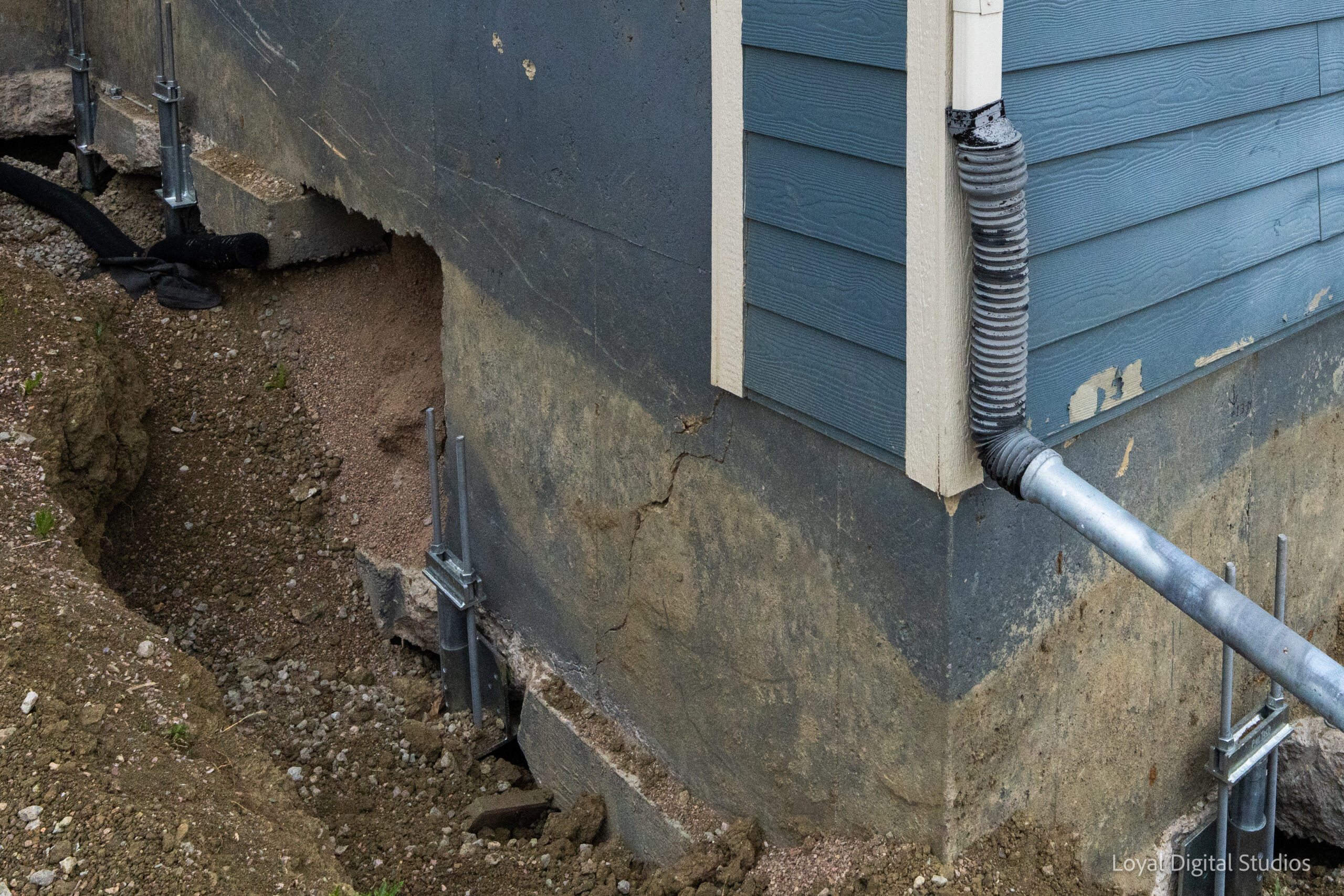
Basement walls are constantly under pressure from the surrounding soil. When that pressure becomes too great, walls can begin cracking, shifting inward, or bowing over time.
Northern Colorado’s clay-heavy soils absorb water and expand dramatically during wet conditions. As the soil pushes against basement walls, pressure builds and structural movement can occur.
When water accumulates around the foundation, it creates lateral pressure against basement walls. Over time, this force can cause cracking and inward bowing.
Improper grading, clogged gutters, and missing drainage systems often allow water to collect around the home’s foundation.
Colorado weather frequently shifts between freezing and thawing temperatures, causing soil expansion and contraction that stresses basement walls.
Uneven settling beneath the home can place additional stress on foundation walls and contribute to cracking or displacement.
Many homeowners assume basement cracks are harmless, but certain types of cracking indicate serious structural concerns.
If you notice these symptoms, scheduling a professional foundation inspection is critical before the damage worsens.
Homes throughout Berthoud, Longmont, Loveland, Fort Collins, Erie, and Broomfield are especially susceptible because of the region’s expansive soils and changing moisture conditions.
Heavy spring moisture followed by dry summer periods creates continuous soil movement around foundations. Combined with Colorado’s freeze-thaw cycles, basement walls are constantly being pushed and pulled by surrounding soils.
This makes proper foundation stabilization essential when structural movement begins.
The right repair solution depends on the severity and cause of the movement. A professional evaluation helps determine whether the issue is cosmetic or structural.
Steel braces, carbon fiber straps, or wall anchors may be installed to stabilize bowing walls and prevent additional movement.
When wall movement is connected to foundation settlement, helical piers may be used to stabilize the structure from below and transfer weight to stable soil layers.
Comprehensive stabilization addresses both the structural movement and the soil conditions causing the problem.
Correcting exterior drainage issues helps reduce hydrostatic pressure against the basement walls.
Many homeowners associate helical piers only with settling foundations, but they can also play an important role when basement wall movement is connected to structural settlement.
Helical piers are steel supports that are mechanically installed deep beneath the foundation into stable soil. Once installed, they help stabilize and potentially lift portions of the home affected by settlement.
For homes experiencing multiple structural symptoms, piers are often part of a complete foundation repair strategy.
In some situations, partially displaced walls can be stabilized and gradually improved through structural reinforcement and pressure relief systems.
However, the earlier repairs are made, the better the chances of avoiding severe permanent displacement.
This is why early foundation inspection services are so important when cracks first appear.
Ignoring basement wall movement can lead to much larger structural problems over time.
What may begin as a small horizontal crack can eventually compromise the entire structural integrity of the basement wall.
Basement wall movement is rarely just a cosmetic issue. Proper diagnosis requires understanding soil pressure, structural loads, drainage conditions, and settlement patterns.
Professional foundation stabilization ensures:
Colorado soil conditions are unique, making local experience especially important when evaluating basement wall problems.
When homeowners need help with bowing or cracking basement walls, they need more than a temporary patch—they need a long-term solution.
Fort August Foundation provides professional foundation repair, foundation stabilization, and foundation inspectionservices throughout Berthoud, Longmont, Loveland, Fort Collins, Erie, and Broomfield.
Rather than simply covering cracks, Fort August Foundation focuses on solving the underlying cause of structural movement for lasting results.
Full-service foundation repair and concrete solutions for Colorado's Front Range. Based in Berthoud serving homeowners from Fort Collins to Pueblo.
