If you’ve been researching foundation repair, you’ve probably come across the term helical pier. But what is a helical pier, and how can something installed underground help support an entire home?
A helical pier is a deep foundation support system designed to transfer the weight of a structure away from unstable soil and into stronger, more reliable soil below. For homeowners in Berthoud, Fort Collins, Loveland, Longmont, Firestone, Johnstown, Denver, and Colorado Springs, helical piers can provide an effective solution for foundation settlement, foundation lifting, and long-term foundation stabilization.
Understanding how they work can make it easier to determine whether they may be the right solution for your home.
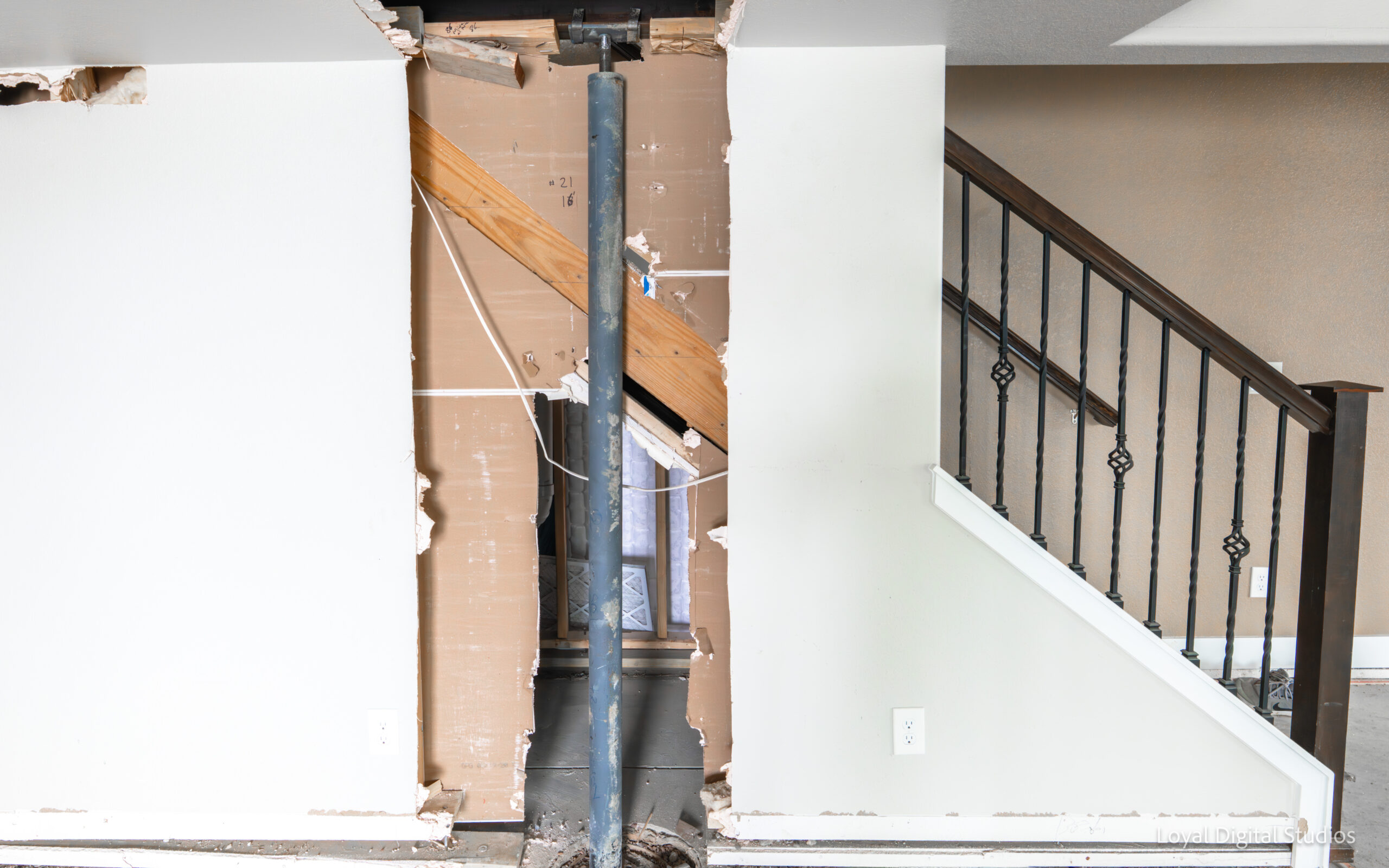
Many foundation problems don’t begin with the concrete itself. They begin with the soil supporting it.
Colorado’s Front Range contains areas with expansive and variable soils. Changes in moisture, drainage conditions, soil composition, and compaction can contribute to movement beneath a foundation.
When the supporting soil can no longer reliably carry the structure, portions of a foundation may begin to settle.
Common warning signs include:
When settlement is the underlying problem, simply repairing the visible crack doesn’t address why the foundation moved.
That’s where helical piers may become part of the foundation repair solution.
Helical piers work by transferring structural loads to soil capable of providing the required support.
Before installing piers, the structure needs to be evaluated to determine what is moving and why.
Not every foundation crack requires helical piers. A proper inspection helps distinguish structural settlement from cosmetic cracking or other problems.
Small areas are typically excavated around the affected portions of the foundation so crews can access the footing and prepare for installation.
Compared with some traditional foundation repair methods, this can limit the amount of excavation required.
Hydraulic equipment rotates each pier into the ground.
As the pier advances, installation measurements help qualified professionals determine whether it has achieved the conditions required by the project design.
The required depth varies from property to property. The goal isn’t simply to install every pier to a predetermined depth; it’s to achieve the support required for that particular structure and soil condition.
After installation, a structural bracket connects the pier to the foundation.
This allows loads from the structure to be transferred through the pier.
Once the pier system is properly installed and loaded, it can help prevent additional settlement in the repaired area.
Depending on the structure and existing damage, foundation lifting may also be considered.
In some situations, yes.
Helical piers can provide the support needed for carefully controlled foundation lifting. Once the pier system has established adequate support, hydraulic equipment may be used to attempt to recover some of the elevation lost through settlement.
However, lifting isn’t always appropriate or achievable.
A home that has been settling for years may have plumbing, framing, drywall, flooring, and other components that have adapted to the new position. Attempting to force a structure completely back to its original elevation could cause additional damage.
For that reason, foundation stabilization is generally the first priority. Any attempt to recover elevation should be based on the conditions of the individual structure and the repair plan.
One of the biggest misconceptions about foundation repair is that repairing a crack fixes the foundation problem.
A crack is often a symptom.
Imagine that one corner of a home is settling because the soil underneath it has lost supporting capacity. Filling the resulting crack may improve its appearance or help seal the opening, but it doesn’t necessarily stop the movement that caused it.
Helical piers address the support beneath the structure.
Once the underlying movement has been addressed, cosmetic and finish repairs can be completed with greater confidence that the structural cause has been corrected.
Homes throughout Berthoud, Fort Collins, Loveland, Longmont, Firestone, Johnstown, Denver, and Colorado Springs can experience challenging soil conditions.
One important factor is moisture.
Some clay-rich soils change volume as their moisture content changes. Wet conditions can cause certain soils to swell, while prolonged dry conditions can contribute to shrinkage.
Other potential contributors to foundation movement include:
Because several different problems can produce similar symptoms, identifying the cause should come before choosing the repair.
When they’re appropriate for the structure, helical piers offer several advantages.
Helical piers can transfer structural loads away from problematic near-surface soils.
Installation generally requires targeted access around pier locations rather than excavating the entire foundation.
Installation data provides useful information as each pier is advanced, allowing the installer to evaluate conditions during installation.
Unlike systems that rely on freshly poured concrete curing before being loaded, properly installed helical pier systems can provide structural support immediately after installation and connection.
When conditions allow, the pier system may provide a stable platform from which controlled elevation recovery can be attempted.
Helical systems can be used for certain existing foundation repairs as well as some new-construction applications.
No.
This is why a professional foundation inspection is so important.
Cracks and uneven surfaces can result from multiple causes. A home’s problem might involve settlement, heaving, drainage, lateral soil pressure, concrete shrinkage, or another structural condition.
The right repair should address the cause, not simply match the symptom to a product.
A qualified foundation professional can evaluate the movement and determine whether helical piers, another stabilization method, drainage improvements, structural reinforcement, or monitoring is appropriate.
One small, stable crack doesn’t automatically mean your home needs major foundation repair. However, changes that appear to be progressing deserve attention.
Consider scheduling an inspection if you notice:
Documenting changes with dated photographs can also help establish whether movement is progressing.
Foundation problems aren’t identical from one property to another. Soil conditions, construction methods, drainage, age, and previous repairs all affect how a home behaves.
Fort August Foundation provides foundation inspection, repair, and stabilization services for homeowners throughout Berthoud, Fort Collins, Loveland, Longmont, Firestone, Johnstown, Denver, Colorado Springs, and surrounding Front Range communities.
When helical piers are appropriate, the goal isn’t simply to install steel beneath the house. The goal is to understand why the structure moved and create a repair strategy that provides reliable long-term support.
Foundation repair can feel overwhelming because much of the problem is hidden underground.
Fort August Foundation takes a solution-focused approach to foundation stabilization, starting with evaluating the structure and identifying the cause of movement.
Our services include:
By handling multiple stages of the project, Fort August Foundation can help simplify the repair process while keeping the focus on the structural problem that needs to be solved.
Full-service foundation repair and concrete solutions for Colorado's Front Range. Based in Berthoud serving homeowners from Fort Collins to Pueblo.
